
Choosing between a design-build remodeler and a general contractor often comes down to how much help you want along the way.
A design-build remodeler brings design and construction together under one roof. This can be especially helpful for larger or more complex projects, including kitchens, additions and whole-home remodels, where layout, selections, structural changes and budget all need to work together.
A general contractor typically focuses on building the project from completed plans. This may be a good fit if you already have an architect or designer, have made your selections and are comfortable coordinating the different professionals involved.
There is not one right answer for every homeowner or every project. The best fit depends on the scope of your remodel, how involved you want to be and whether you would prefer one team to guide the project from the first ideas through construction.
Which should I hire?
Choose a design-build remodeler if:
You want one company to manage design, selections, budgeting, permits and construction.
Choose a general contractor if:
You already have complete plans and selections or want to hire and coordinate your architect, designer and contractor separately.
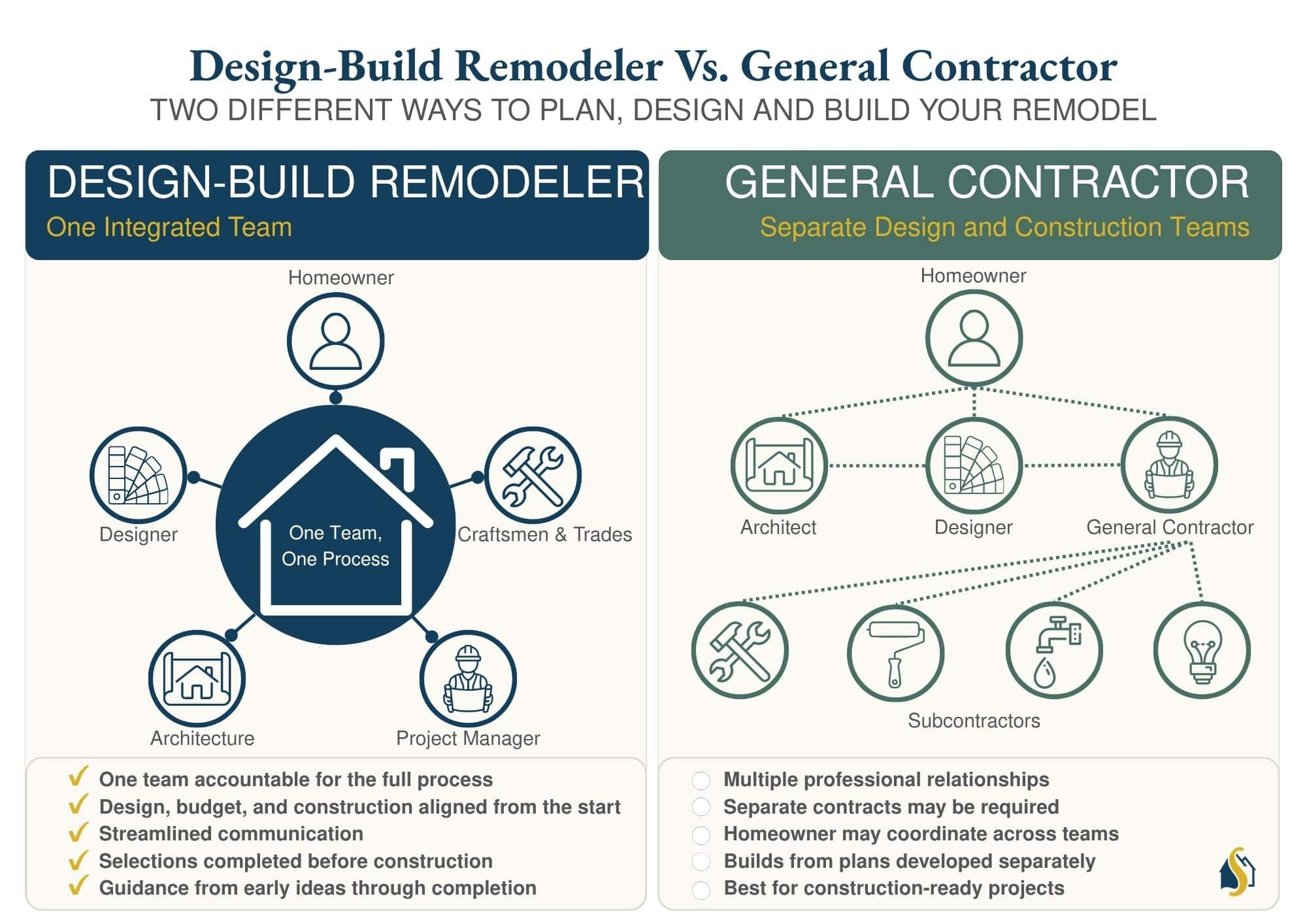
Question | Design-build remodeler | General contractor |
|---|---|---|
Who develops the design? | The company’s integrated design team | A separate architect, designer or the homeowner |
Who manages construction? | The same company responsible for design | The general contractor |
When is the budget developed? | Alongside the design and selections | Usually after plans are sufficiently complete |
Who coordinates the professionals? | The design-build company | Often the homeowner, architect or another hired professional |
How many contracts are involved? | Usually one primary construction agreement with the design-build company | Separate agreements may be required |
Who helps select materials? | The design team guides and documents selections | Varies by contractor and project |
What projects are a strong fit? | Kitchens, bathrooms, additions, whole-home remodels and complex renovations | Projects with completed plans, defined selections and limited design needs |
Who is accountable for the full process? | One company oversees the project from design through construction | Responsibility is divided among separate parties |
What is a design-build remodeler?
A design-build remodeler provides residential design and construction services through one company. Depending on the firm and project, the team may include interior designers, architectural professionals, estimators, project managers, carpenters and trade partners.
The design and construction teams work together while plans, selections, scope and pricing are developed. This allows construction knowledge and current cost information to shape the design before work begins.
A full-service design-build firm will also often prepare permit documents, coordinate required engineering, submit for local permits and help manage neighborhood or HOA approval requirements. For the homeowner, that means fewer separate professionals and fewer administrative steps to navigate alone.
The primary benefit is unified responsibility. Rather than separately managing a designer, architect, contractor, permitting process and HOA requirements, the homeowner works with one company throughout the remodel.
What is a general contractor?
A general contractor manages the construction portion of a project. The contractor typically schedules the work, coordinates subcontractors, oversees inspections and builds according to the plans and specifications provided.
For a remodeling project that requires architectural plans, interior design, engineering, permits or HOA approval, the homeowner may need to hire or coordinate those services separately. Some general contractors assist with permitting, so homeowners should ask exactly what is included before hiring.
A general contractor can be a strong choice when the plans, specifications, selections and required approvals are already in place.
Should I hire a design-build remodeler or a general contractor?
A design-build remodeler may be the better fit when your project still needs to be designed, requires several professionals or involves decisions that affect both appearance and construction.
A general contractor may be the better fit when you already have complete construction documents, specifications and selections and primarily need someone to build the project.
Consider the complexity of your remodel
First, think about how complex your project will be. Does it involve structural changes, a detailed design or custom solutions? If so, a design-build remodeler may be a strong fit.
Because the design and construction teams work together from the beginning, they understand both the vision and what it will take to build it. This coordination can help identify challenges earlier, keep the design aligned with the budget and address issues more efficiently if they arise during construction.
A general contractor may be a good fit for a more straightforward project with limited structural changes and a design that is already complete. In that case, the contractor can focus on managing the construction, coordinating the trades and building according to the established plans.
Consider how your budget will be developed
A remodel cannot be accurately priced from inspiration photos or a preliminary floor plan alone. The cost is shaped by the scope of work, structural requirements, cabinetry, fixtures, finishes, labor and many other decisions.
In a design-build process, the design and budget are developed together. The team can evaluate cost while the plans and selections are still being refined, allowing the homeowner to make informed tradeoffs before signing a construction agreement.
With a general contractor, meaningful pricing usually requires completed plans and clearly defined specifications. If important details remain undecided, estimates may include allowances or exclusions that can change as the project progresses.

Consider how involved you want to be
Some homeowners want to select and manage separate professionals. Others prefer one company to guide the entire project.
Design-build may be the better choice if you want help developing the layout, making selections, evaluating costs and coordinating the construction team.
A general contractor may suit you if you already have an architect or designer you want to use, prefer separate contracts or are comfortable helping coordinate communication between the project’s different professionals.
Consider the complete project timeline
Design-build does not eliminate the time required to properly design and prepare for a remodel. Instead, it brings design, budgeting, selections and construction planning into one coordinated process.
Completing those decisions before construction begins can reduce delays caused by missing selections, incomplete plans or materials that were not ordered on time.
With a general contractor, the homeowner should confirm that plans, engineering, product decisions and material lead times have been addressed before construction is scheduled.
Compare the Two Remodeling Approaches
A design-build remodeler may be right for you if:
- You need help determining what is possible.
- Your remodel involves a layout or structural change.
- You want design guidance and construction expertise together.
- You want pricing feedback while the design is being developed.
- You prefer one company to coordinate the project.
- You want most selections completed before construction starts.
- You are remodeling several rooms or building an addition.
A general contractor may be right for you if:
- You already have complete architectural or construction plans.
- You have finalized the materials and specifications.
- You already work with an architect or independent designer.
- You are comfortable managing separate contracts.
- Your project primarily requires construction rather than design.
- You understand which items you will be responsible for purchasing or coordinating.
Choosing a remodeling company in Kansas City
Whether you hire a design-build remodeler or a general contractor, look for a company with experience in homes similar to yours and projects comparable in size and complexity.
Kansas City homes can present very different challenges depending on their age, construction and neighborhood. Remodeling an older Tudor in Brookside or along Ward Parkway may require a different approach than updating a newer home in Johnson County or renovating a lake property.
Ask each company:
- Who will develop the design and construction documents?
- Who will establish the project budget?
- Which selections must I make independently?
- Who coordinates permits and engineering?
- Who will manage the project each day?
- How are changes and unexpected conditions handled?
- What is included and excluded from the contract price?
The answers will tell you more than the company’s job title alone.
The right choice depends on the process you need
A design-build remodeler is usually the stronger fit when you want help taking a project from an initial idea through design, budgeting, selections and construction. A general contractor may be a good choice when you already have complete plans and primarily need a professional to manage the build.
Before hiring either one, compare the complete services being provided, not simply the initial price. Ask who is responsible for the design, materials, pricing, permits, scheduling and communication throughout the project.
Schloegel Design Remodel provides design and construction services for kitchens, bathrooms, additions, lower levels and whole-home remodels throughout the Kansas City area and Lake of the Ozarks. Our team guides homeowners from early planning through the final walkthrough.
Have a remodeling project in mind? Contact us to discuss your home, goals and the next steps.
Design-Build Frequently Asked Questions
No. A general contractor primarily manages construction, while a design-build remodeler provides both design and construction through one company. Some general contractors offer limited design assistance, and services vary by company, so homeowners should ask exactly what is included.
Not necessarily. The final cost depends on the project scope, materials, complexity and level of service included.
A general contractor’s initial estimate may appear lower when architectural or design fees, engineering, selections, permitting or other services are not included. The estimate may also rely on allowances for materials that have not yet been selected.
With design-build, the team spends more time upfront developing the plans, making selections and defining the full scope before the construction price is finalized.
When comparing proposals, look beyond the bottom-line number. Ask whether design services, architectural plans, engineering, permits, materials, selections and project management are included, and how allowances or undecided items will be handled.
Many design-build firms provide architectural planning directly or coordinate with architects and structural engineers when needed. The available services depend on the company and the requirements of the project.
Schloegel’s team includes experienced designers and a degreed architect. When a project requires additional structural analysis or specialized expertise, we coordinate with the appropriate professional.
Often, yes. The design-build team will need to review the plans, specifications, scope and budget before determining whether the project is ready for construction. Additional development may be needed if selections or construction details are incomplete.
Contact a design-build remodeler when you are first considering a project. You do not need to have the layout, materials or details figured out before reaching out.
The design-build team will learn how you want your home to look, feel and function, then work through design options based on your wishes, lifestyle and budget. Starting early also allows the team to evaluate what is possible, identify construction or structural needs and guide the project from the first ideas through completion.
A contractor may be able to provide preliminary guidance without completed plans, but accurate construction pricing generally requires a clearly defined scope, detailed plans and product specifications.
The professional responsible varies by project and company. In a full-service design-build process, the design-build firm generally prepares the required construction documents and coordinates permitting. Homeowners should confirm permit responsibilities before signing an agreement.
With design-build, one company is responsible for coordinating the design and construction teams. Under a traditional arrangement, the homeowner, architect and contractor may need to determine whether the issue relates to the plans, existing conditions or construction.