
Dark kitchen cabinets continue to be one of the most requested design features in modern remodels, but they can also come with some hesitation. Homeowners often wonder if deep tones like black, navy, charcoal, or rich walnut will make a kitchen feel too dark, too heavy, or too closed in.
Across recent Kansas City kitchen remodels, we’ve found that success comes from how the surrounding design elements are layered- light, texture, contrast, scale, and natural materials all play a role in shaping how the space feels.
What’s interesting is that each of these kitchens solves the same “dark cabinet question” in a completely different way. One leans into warm wood and brass, another uses reflective finishes and layered lighting, while others rely on natural light, high contrast, or thoughtful material mixing to keep the space feeling open and inviting.
Below are seven real Kansas City kitchens that show just how many ways dark cabinetry can work beautifully, whether the space is large or small, traditional or modern, bold or understated.
Table of Contents
- Navy Cabinetry with Warm Wood, Brick & Brass
- Charcoal Cabinets with Glam Light-Reflecting Details
- Black Cabinets with Bright, Modern Contrast
- Rich Walnut Cabinetry with Timeless Appeal
- Matte Black Contemporary Cabinets with Warm Accents
- A Transitional Kitchen with Rich Contrast
- Dark Cabinets that Brighten a Small Kitchen
- Why Dark Cabinets Work in Modern Kitchen Design
- Frequently Asked Questions: Dark Kitchen Cabinets in Modern Kitchen Design
1. Navy Cabinetry with Warm Wood, Brick & Brass
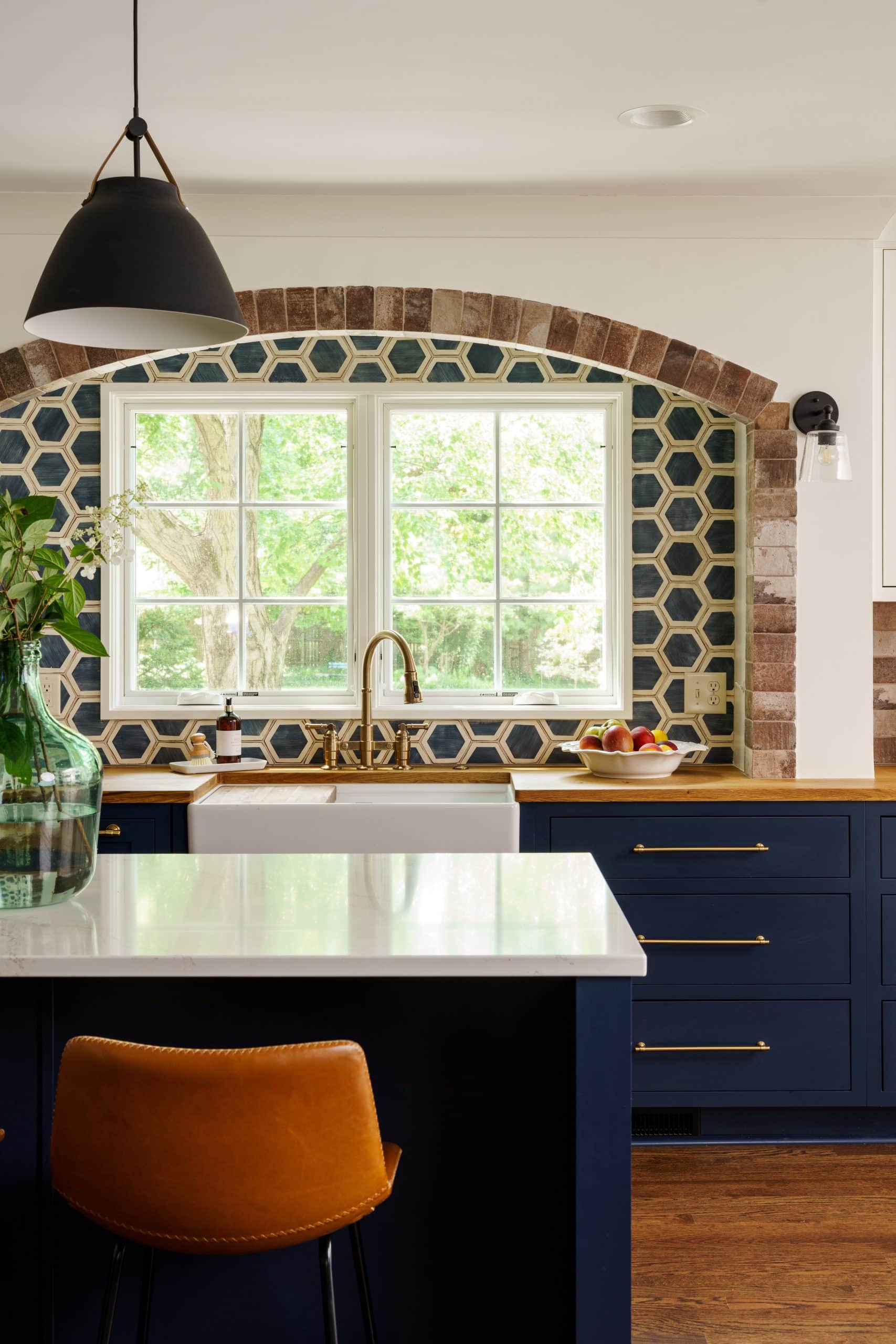
Deep navy cabinetry makes a bold statement in this Prairie Village kitchen, but the space never feels dark or heavy. Warm butcher block countertops, a creamy farmhouse sink, and brass hardware soften the rich cabinet color while adding timeless character.

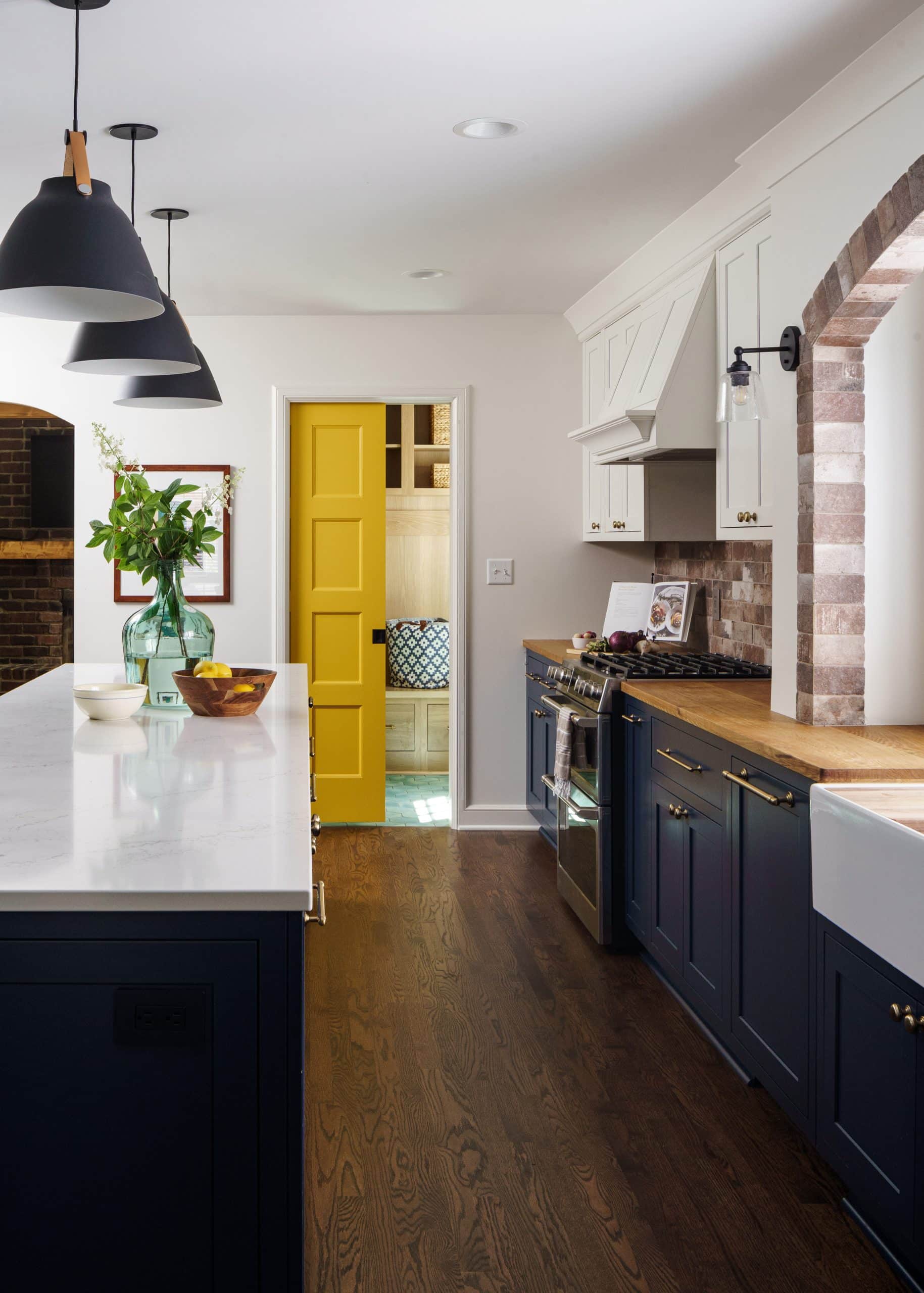
A faux brick backsplash around the window introduces texture, while the modern navy and cream-toned hex tile and bright island quartz countertops reflect light throughout the room. Together, these layered finishes create a kitchen that feels warm, inviting, and effortlessly modern.
2. Charcoal Cabinets with Glam Light-Reflecting Details
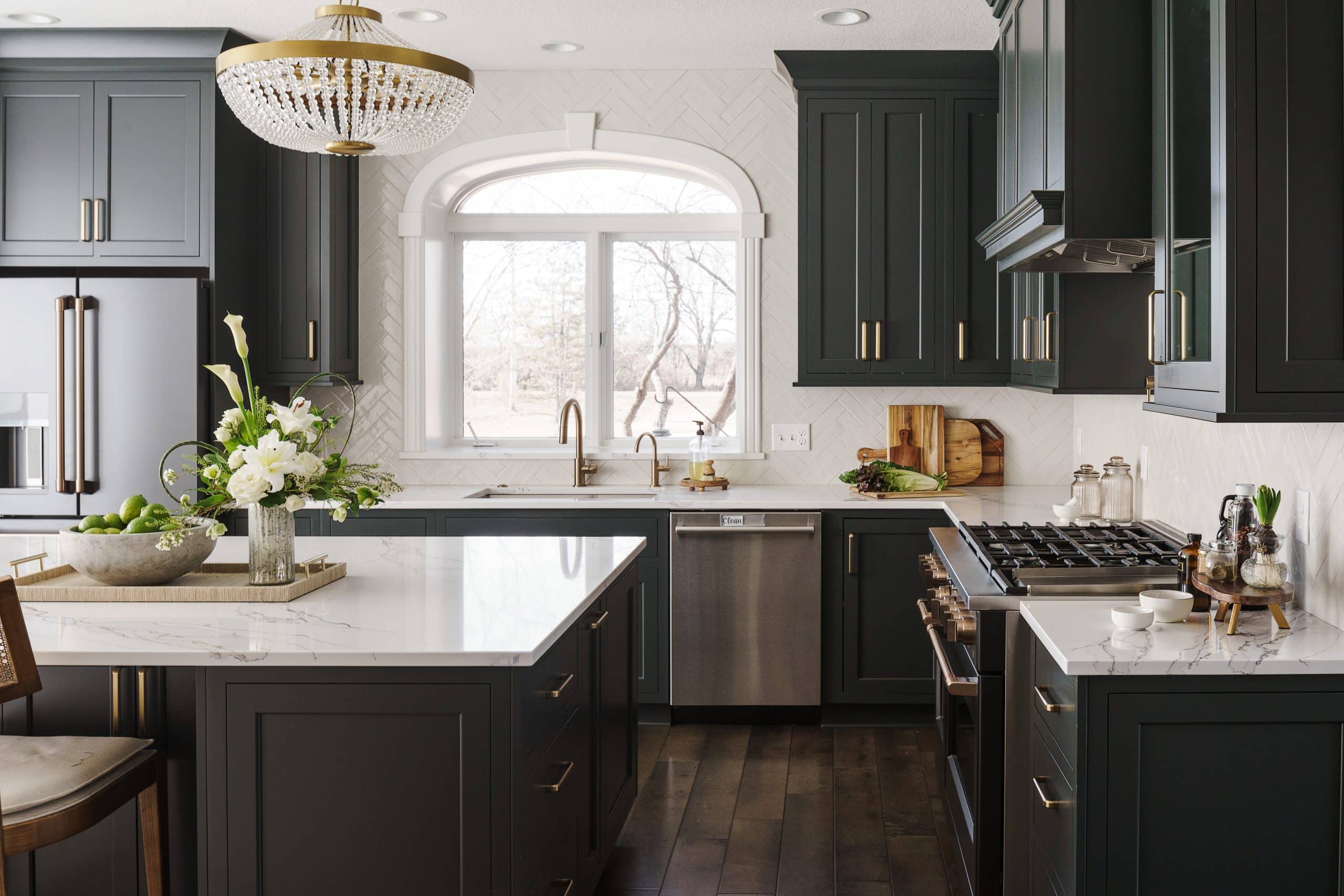
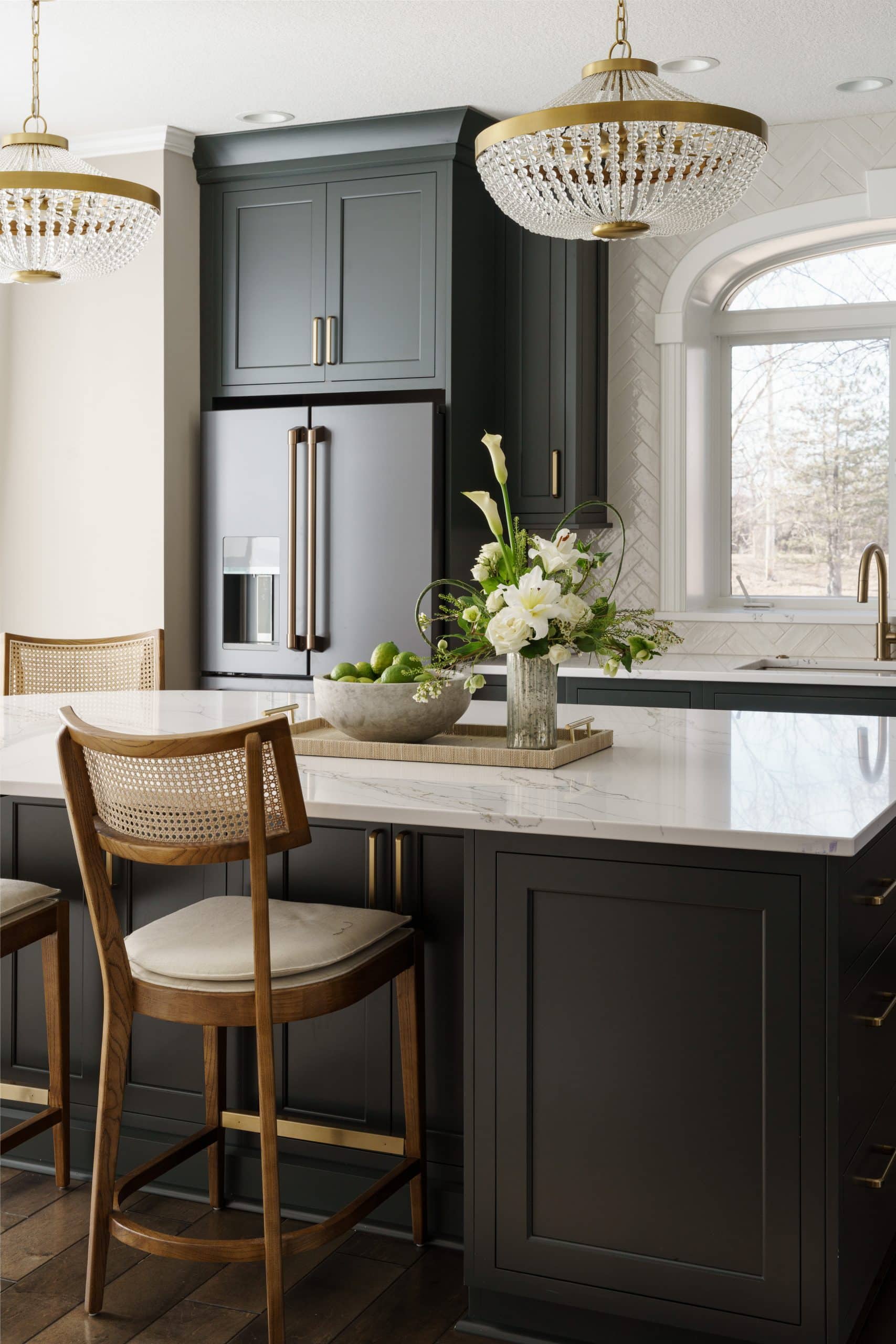
Charcoal cabinetry and dark-stained wood floors create a dramatic foundation, but thoughtful design details keep this kitchen feeling bright and open. Full-height glossy subway tile in a warm cream herringbone pattern reflects natural and artificial light, while creamy white countertops and gold accents add warmth and contrast.
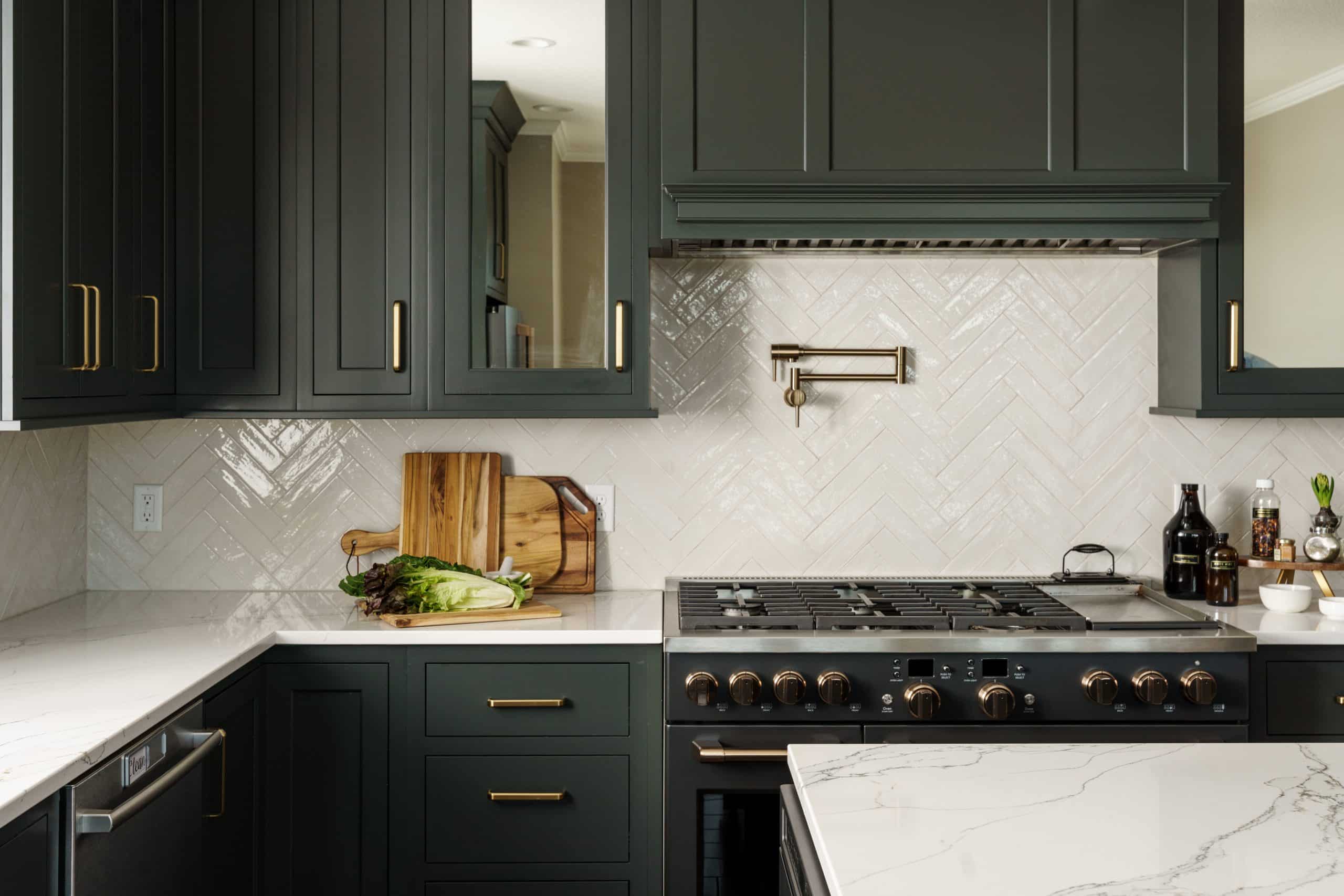
Mirrored inset cabinets flanking the range hood help bounce light throughout the space, and modern glam fixtures paired with ample recessed lighting ensure every corner feels illuminated. The result is a sophisticated, high-contrast Overland Park kitchen that proves dark cabinetry can feel just as airy as an all-white design.

3. Black Cabinets with Bright, Modern Contrast
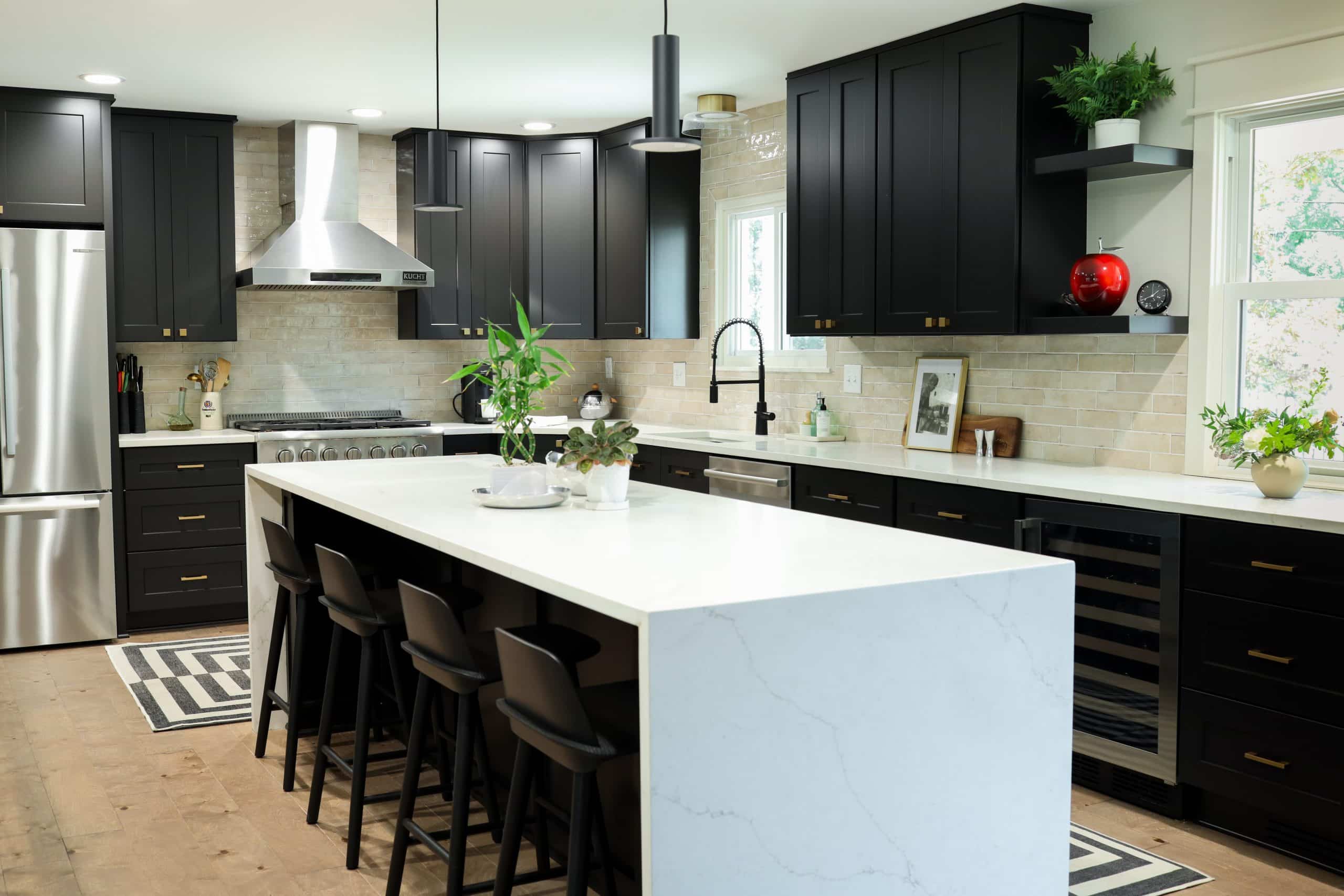
This Leawood condo kitchen proves that black cabinetry can feel sleek without making a space feel small. A large white waterfall island immediately brightens the room, while the full-height creamy stone inspired backsplash reflects both natural light from the surrounding windows and the home's layered lighting.
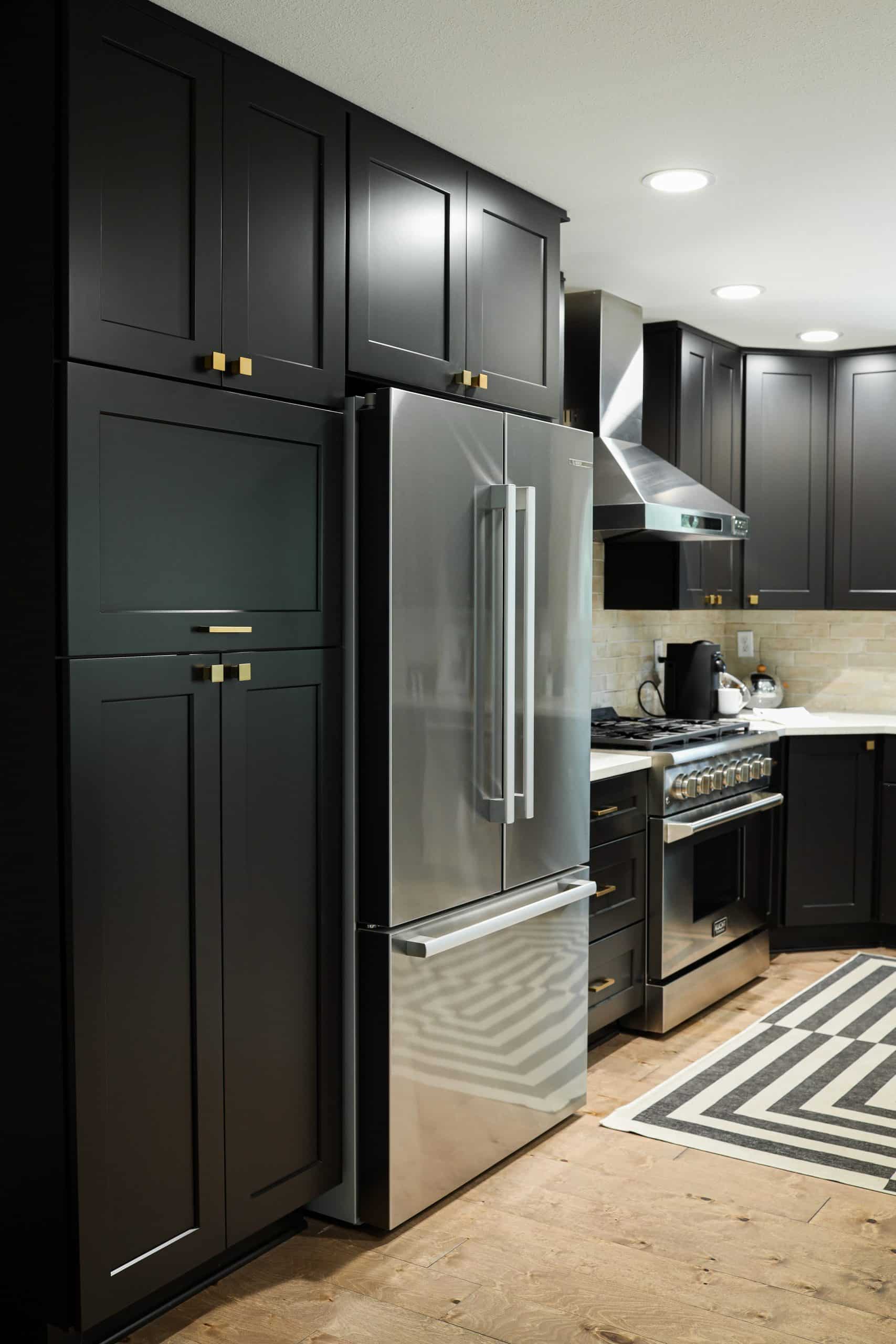
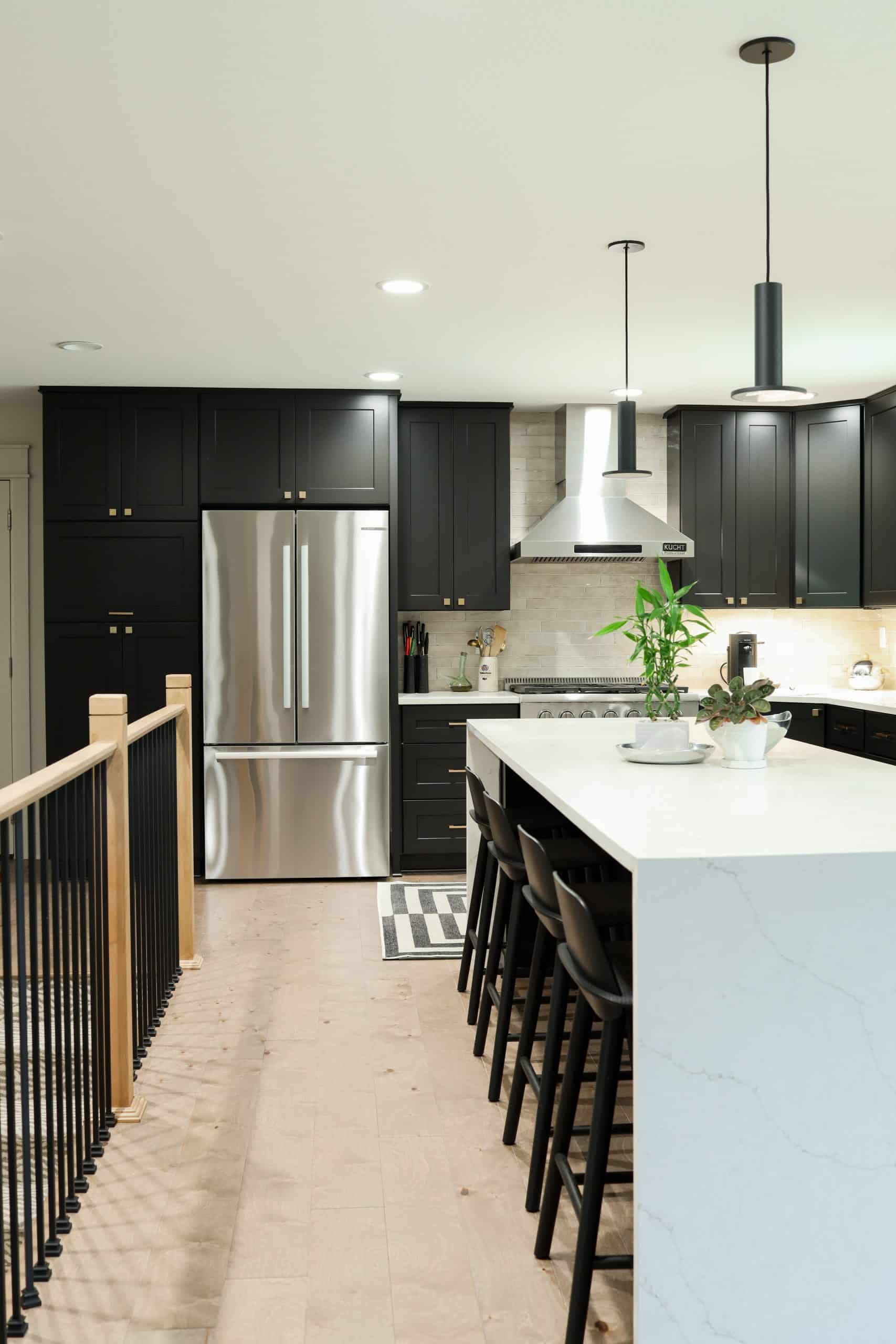
Neutral flooring keeps the palette light, and warm gold hardware adds contrast against the black cabinetry. Paired with stainless steel appliances, the mixed metals create a polished, contemporary look that feels balanced, bright, and effortlessly modern.
4. Rich Walnut Cabinetry with Timeless Appeal

Rich walnut cabinetry gives this De Soto kitchen warmth and character, proving that darker wood finishes can feel timeless rather than dated. Vaulted ceilings with exposed wood beams draw the eye upward and create an open, airy feel, while expansive windows flood the space with natural light.
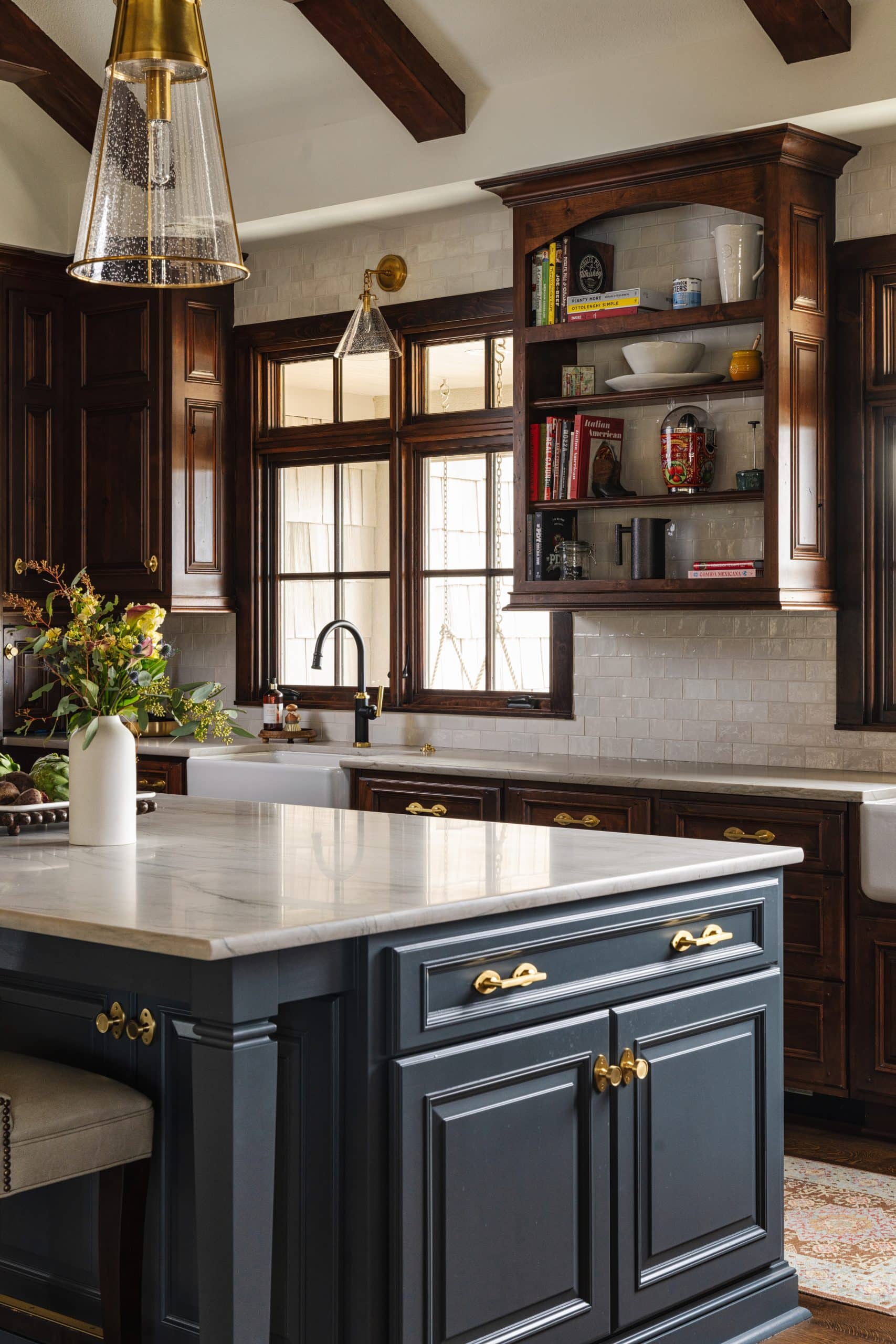

Warm creamy countertops, a full-height glossy subway tile backsplash, and the classic farmhouse sinks provide crisp contrast against the deep wood tones. A muted navy, almost grey island introduces another layer of warmth, while warm white walls, light-colored bar stools, and layered lighting keep the kitchen feeling bright. Traditional trim details complete the design, creating a space that feels refined, inviting, and effortlessly classic.
5. Matte Black Contemporary Cabinets with Warm Accents

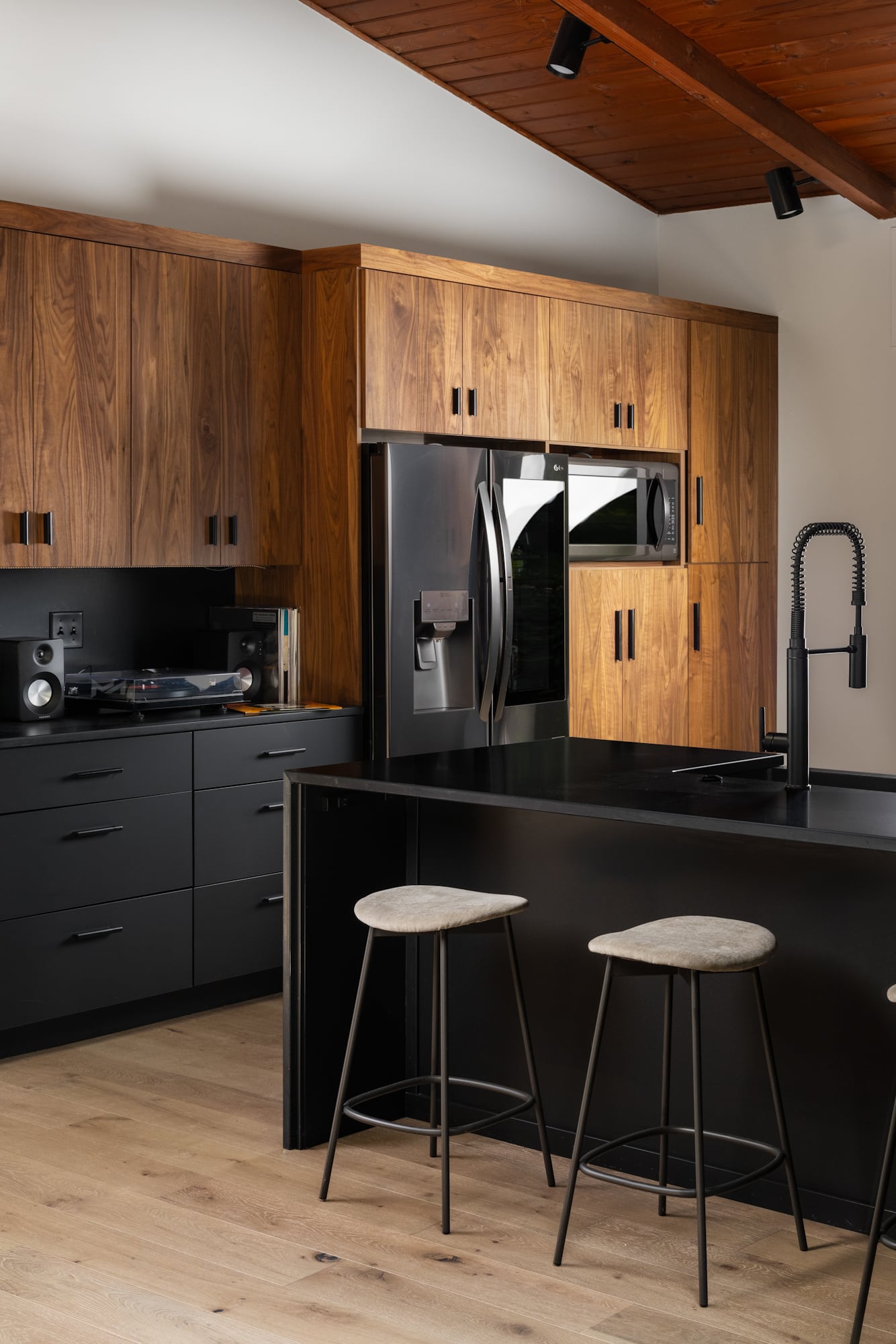
This sleek mid-century kitchen in Prairie Village proves that matte black cabinetry can feel warm and inviting when paired with natural materials. Sleek black lower cabinets are balanced by richly grained walnut upper cabinets, creating contrast while showcasing the beauty of natural wood.
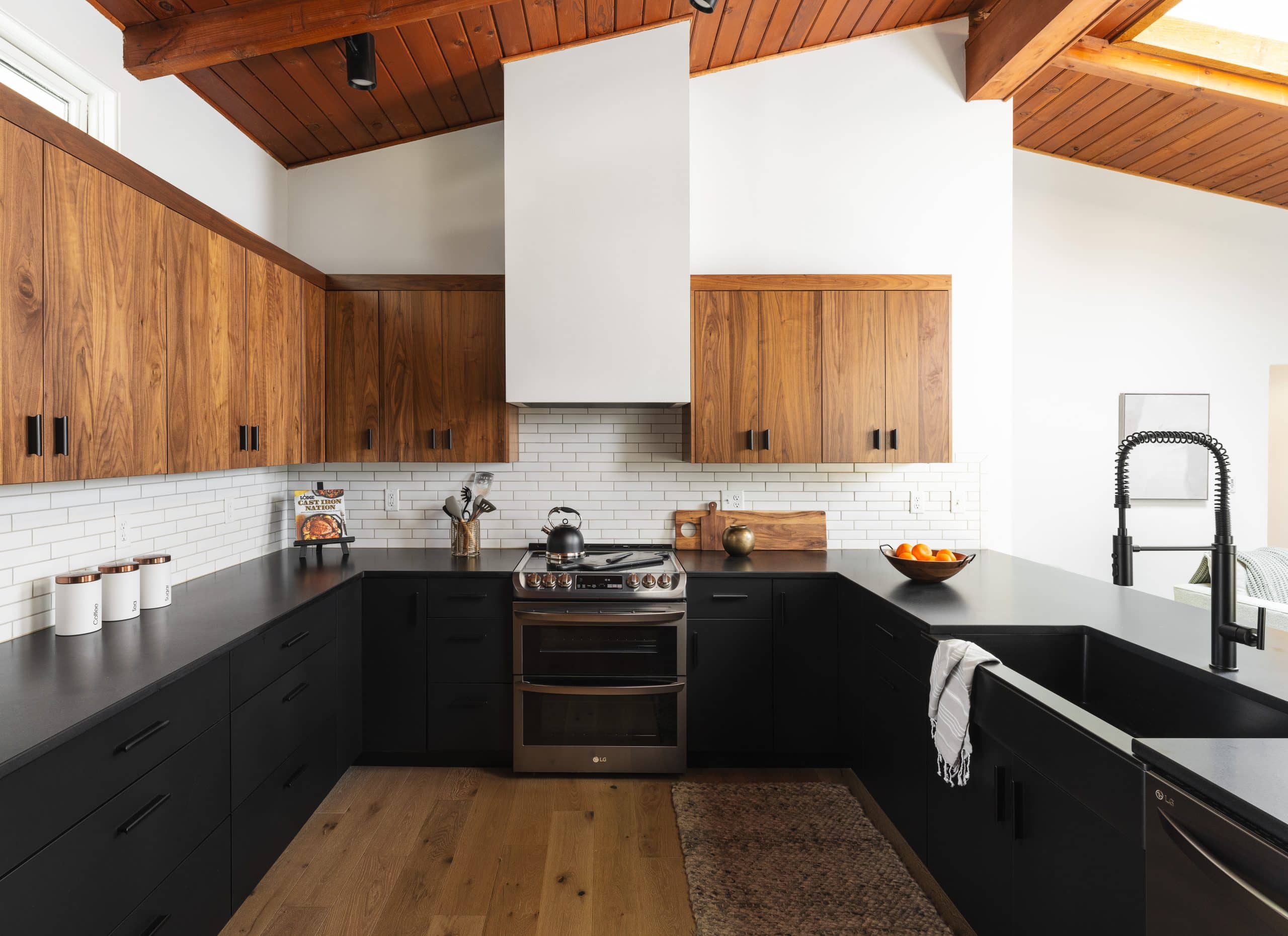
White walls, a classic subway tile backsplash, Cambria Black counters, and light wood flooring brighten the space, while warm wood ceiling paneling draws the eye upward and adds texture. Minimal black hardware and streamlined cabinet profiles complete the modern aesthetic, resulting in a kitchen that feels clean and sophisticated without ever feeling cold or heavy.
6. A Transitional Kitchen with Rich Contrast

This transitional Lenexa kitchen layers rich finishes to create depth without making the space feel dark. Warm Shiloh Maple cabinetry with the Spice stain pairs beautifully with a bold Iron Ore island, while creamy countertops and a light backsplash brighten the overall palette.


The uniquely shaped island softens the room with its curved seating area, adding a custom detail that feels fresh and inviting. Dark-stained floors and charcoal black appliances blend seamlessly into the design, allowing the warm wood tones and lighter surfaces to take center stage. The result is a kitchen that feels timeless, balanced, and effortlessly warm.
7. Dark Cabinets That Brighten a Small Kitchen

This Brookside, KCMO kitchen proves that dark cabinetry isn't just for homes with a large kitchen footprint. Iron Ore upper and lower cabinets create a rich foundation, while a warm walnut island introduces natural texture and contrast. A full-height quartz backsplash and matching countertops reflect light throughout the space, making the smaller footprint feel bright and open.


Creamy wall colors, layered lighting, and a mix of warm hardware with stainless steel appliances add depth without overwhelming the room. The result is a cozy, sophisticated kitchen that feels both inviting and spacious.
Why Dark Kitchen Cabinets Work in Modern Design
Dark kitchen cabinetry creates depth, contrast, and visual interest. In modern kitchen design, these richer tones are successfully balanced by large windows, reflective surfaces, lighter countertops, and layered lighting, all of which work together to keep the space feeling open, intentional, and inviting rather than heavy.
As a result, today’s dark kitchens feel grounded and timeless instead of heavy or overpowering. Whether the finish is rich walnut, charcoal, deep navy, or classic black, the key to success is how surrounding materials and lighting are intentionally layered to support the cabinetry and shape the overall feel of the space.
However, what these kitchens ultimately reveal is that dark cabinetry isn't a limitation but instead a design opportunity. Rather than relying on a single formula, each space demonstrates a different approach to achieving balance. Ultimately, whether the style is traditional, transitional, or fully contemporary, the takeaway is consistent: when light, texture, contrast, and proportion are carefully balanced, dark kitchen cabinets don't feel too heavy—they feel grounded, timeless, and elevated.
If you are considering darker cabinetry for your own remodel, these examples remind us there is no single “right” way to achieve the look, only the right combination of design decisions tailored to the space!
Frequently Asked Questions: Dark Kitchen Cabinets in Modern Kitchen Design
Are dark kitchen cabinets still in style?
Yes. Dark kitchen cabinets remain one of the most in-demand choices in modern kitchen design. Homeowners continue to choose black, charcoal, navy, and rich wood tones because they create depth, contrast, and a timeless foundation that works across both traditional and contemporary homes.
How do you make dark kitchen cabinets feel bright instead of heavy?
The key is balance. Dark cabinetry feels bright when it is paired with layered lighting, reflective surfaces, and lighter surrounding finishes. For example, quartz countertops, full-height backsplash materials, and large windows help bounce light throughout the space. In many Kansas City remodels, the combination of contrast, texture, and lighting design is what keeps dark kitchens feeling open and inviting.
What colors work best with dark kitchen cabinets?
White, cream, warm neutral stone, and light gray countertops are commonly used to brighten dark cabinetry. Many modern kitchens also incorporate natural wood tones, brass or gold hardware, and mixed materials to soften contrast and add warmth while maintaining a clean, modern feel.
Do dark kitchen cabinets make a kitchen look smaller?
Not when they are designed correctly. In fact, dark cabinets can add depth and structure to a kitchen. When paired with proper lighting, lighter surfaces, and intentional layout design, they often make the space feel more layered and visually interesting rather than smaller.
What cabinet colors are most popular for modern kitchens right now?
Black, Iron Ore, charcoal, deep navy, and warm walnut are all highly popular in modern kitchen design. Many homeowners also combine finishes—such as dark perimeter cabinets with a contrasting island—to create visual balance and architectural interest. If you're looking for more home design inspiration, check out our galleries!
Are dark kitchen cabinets hard to maintain?
Dark cabinets can show fingerprints and dust more easily depending on the finish, but high-quality matte and satin finishes are designed to reduce visibility. With routine cleaning and proper material selection, they are easy to maintain in everyday use.
Can you use dark cabinets in a small kitchen?
Yes. Small kitchens can absolutely support dark cabinetry when the design is intentional. The most important factors are light-reflecting surfaces, lighter wall colors, layered lighting, and thoughtful material contrast. These elements prevent the space from feeling closed in.
How much does a kitchen remodel cost in Kansas City?
Kitchen remodeling costs in Kansas City vary based on size, layout changes, and material selections. As a design-build remodeling team, we help establish a realistic budget early in the process and guide selections to align with both design goals and investment level.
How long does a kitchen remodel take?
Most kitchen remodels take several months depending on scope, design complexity, and material lead times. A structured design-build process helps streamline planning, selections, and construction to keep the project moving efficiently.
What should I prioritize in a kitchen remodel?
Start with layout, functionality, and storage. Once the foundation is correct, focus on cabinetry, lighting, countertops, and finishes. In successful modern kitchen design, especially with dark cabinets, lighting and material layering play a major role in how open and balanced the space feels. One of our designers would be happy to help guide you through the design and planning phase for your kitchen remodel!
What is a design-build remodeling firm, and how is Schloegel different?
Schloegel Design Remodel is a design-build remodeling firm, which means design, planning, and construction all happen under one team. Instead of managing separate designers, contractors, and trades, homeowners work with a single integrated team from concept through completion.
This approach and our process create a more seamless process, clearer communication, and better alignment between design intent and construction execution—especially in complex projects like whole home remodels.
In addition to full remodeling services, Schloegel also offers a dedicated handyman team. This allows homeowners to take care of smaller projects, repairs, and ongoing updates with the same level of trust and craftsmanship, even after a larger remodel is complete.
Ready to make your home a place you love to live in? Contact us!