
What’s an Ice Dam? – Preparing Your Home Now Can Save Headaches Later
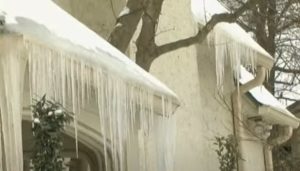 Though winter weather may seem like a long way off, the cool evenings of fall remind us that now is the time to start thinking about protecting your roof from the formation of ice dams.
Take Charlie’s advice … Fox 4 News Video.
So, what is an ice dam? An ice dam occurs when your gutters fill with moisture (run-off from your roof), and that moisture then freezes (typically in the gutters). Eventually, the moisture will freeze to a point where the moisture run-off from your roof can no longer go over or around the “dam” that has been created by the ice-clogged gutter. Then, the water begins to back up under the shingles and the “underlayment” or moisture barrier of a roof. This moisture then manifests itself inside your home, usually at an opening in a ceiling, such as a can light, or at a low point in the ceiling.
The best strategy is to get ahead of ice dams. If you’ve had a dam before, it will most likely rear its ugly head again! Be prepared – install heaters in your gutters in the fall and ensure the gutters are clear of all debris (dirt, leaves, sticks, acorns, etc.). Be sure that downspouts are clear of debris and are draining properly. An easy way to spot clogged gutters and downspouts is to look for ice forming on fascia boards, soffits, and over the top, along the sides, or at the undersides of gutters. Icicles are a telltale sign of poor drainage. When you install a new roof, ask about an ice and water shield. In some municipalities, it’s required by code to install an ice and water shield. Another way to assist in preventing ice dams is to properly insulate your attic.
It is also a good idea to invest in a roof snow rake. Generally less than $75, the rake can help you remove snow & ice that has accumulated near your gutters. Never attempt to get on an icy roof; stay on the ground or call a professional to help.
Feel free to contact our Handyman Services team with questions regarding ice dams.