
If you have an older home with wood siding, you’ve likely dealt with wood rot—if not, consider yourself lucky! Unfortunately, wood rot can quietly wreak havoc on your home’s exterior. If left untreated, it can lead to costly structural damage and ongoing maintenance issues. That’s why our Schloegel Handyman Services team was called in to repair rotted cedar shakes on this Leawood home.
Emily Robbins on our Handyman Services team walks us through the repair process from rot removal to installing composite trim, sealing it all up, and applying a clean, protective finish. Whether you’re a homeowner spotting signs of damage or just curious about how the pros do it, here’s what to expect.
Step 1: Identify and Mark the Rotted Cedar Shakes
Rot is easy to detect if you know what to look for—soft, spongy wood and visible dark spots are dead giveaways. Once the problem area was located, we used a level to mark a clean line above the rot, ensuring precise removal.
Pro Tip: Don’t just inspect the surface. Often, rot hides beneath the first layer of shakes.

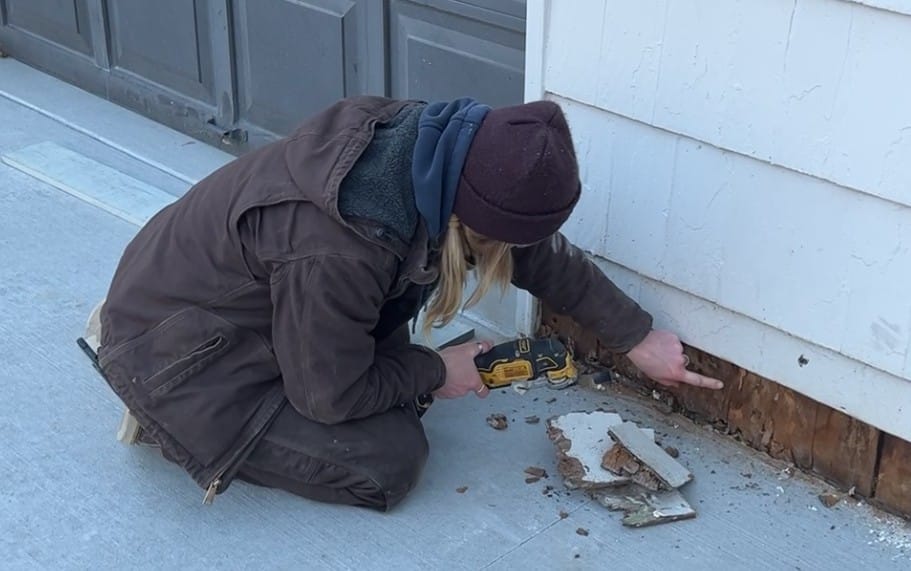
Step 2: Cut and Remove the Rotted Shakes
Using a multi-tool, we carefully cut and removed the rotted cedar shakes. In this case, we discovered not just one, but two layers of rot—meaning the repair required a full strip-down to solid material.

Step 3: Install Z-Bar Flashing
Before adding any new material, we installed Z-bar flashing underneath the shingles. This essential step prevents future water intrusion by diverting moisture away from the wall and trim below.

Step 4: Replace with Composite Trim
Instead of reinstalling cedar, we upgraded to ash composite trim—a long-lasting, rot-resistant alternative. It's a smart move for any homeowner wanting to reduce future maintenance.
The trim was fastened securely using a pneumatic nail gun, but a standard nail gun or hammer and nails also works.

Step 5: Seal the Seams
We sealed all trim joints with Quad caulk, ensuring a watertight barrier. To get a smooth bead:
Pro Tip: Spray your finger with a Dawn and water solution before smoothing caulk. It prevents sticking and gives a professional finish. 409 or Windex work too!

Step 6: Prep and Paint
After caulking, we:
- Hammered in exposed nails
- Filled seams with spackling paste
- Cleaned the surface thoroughly
- Painted - we waited for warmer weather before painting to ensure proper curing. A multi-purpose aerosol primer provided great coverage, followed by two coats of durable exterior paint.
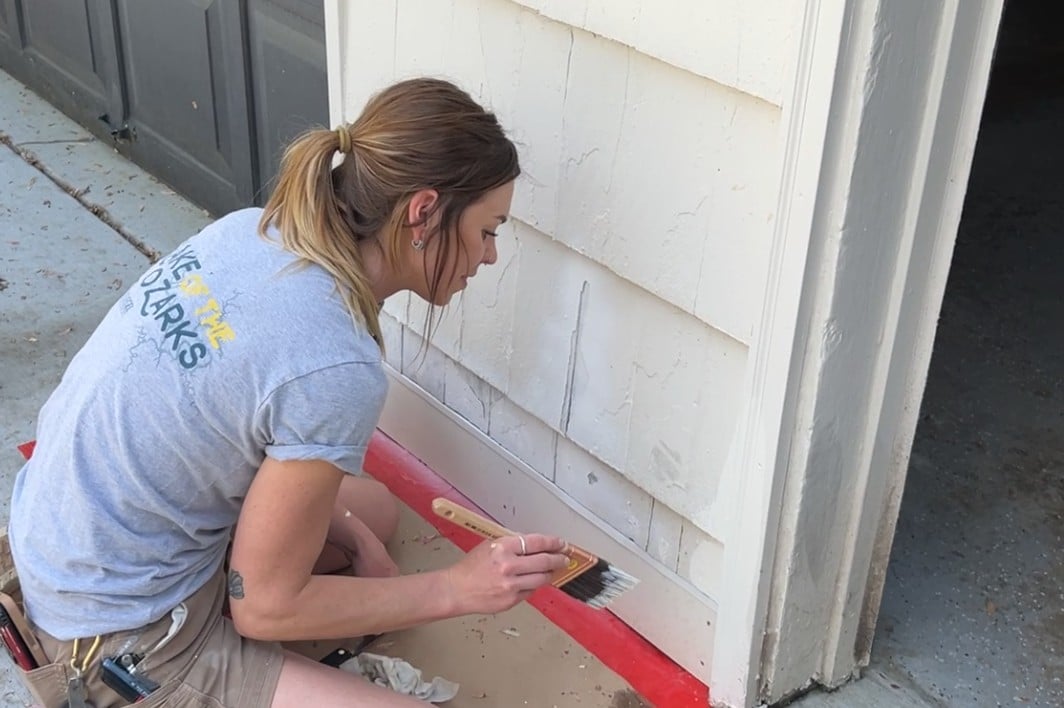
Why Use Composite Trim for Wood Rot Repairs?
Traditional wood siding looks great—but it doesn’t hold up well in wet or shaded environments. While we didn't replace the entire home with composite shingles it did make since to replace the rotted shingles with composite trime because:
- Won’t rot or warp
- Requires less maintenance
- Still gives a clean, wood-like appearance
- It’s a smart solution for homeowners looking for a long-term fix.
Final Result
It turned out great! Gone are the partially detiorated shake shingles and missing paint—and even better, it’s built to last. With the new composite trim and proper flashing and sealing, this Leawood home is protected from future wood rot.

Need Help with Wood Rot Repairs in Kansas City? Get help from the Schloegel pros! Contact Us to schedule your estimate.